2026 Changes to FLSA Overtime Exemption Rules: What Employers Should Know About Revised Salary Requirements
June 8, 2026 | By: Paul H. Mazer, Esq., Patrick W. McGovern, Esq., Michael Thurm, Esq.
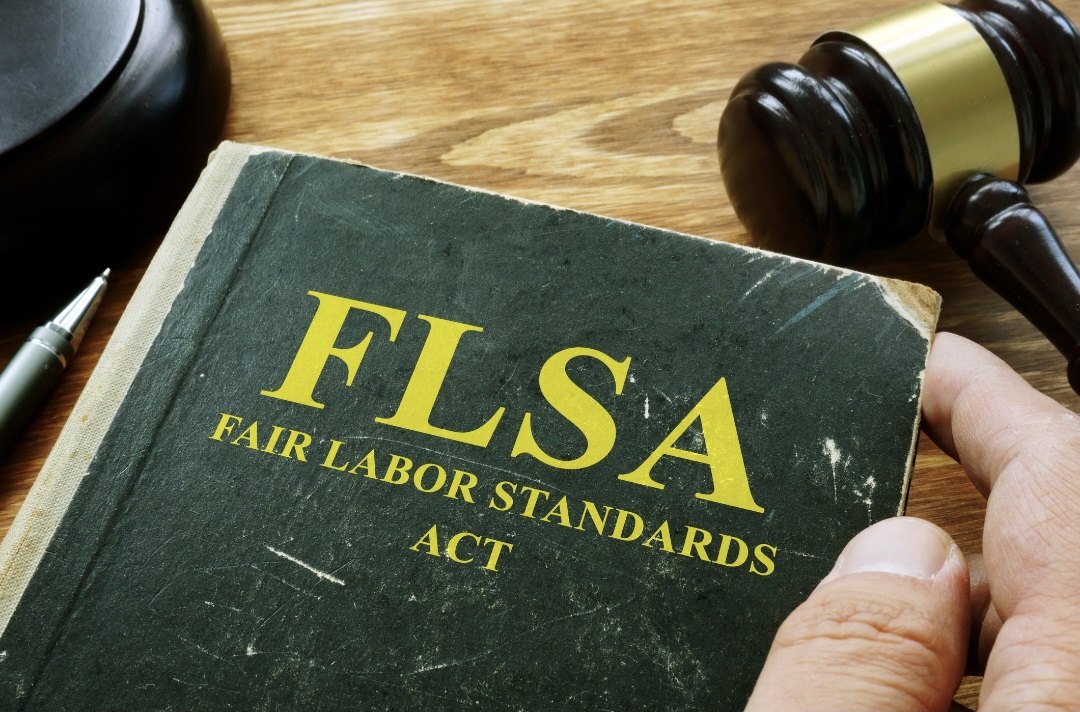
Keeping up with overtime rules is like trying to hit a moving target. The Fair Labor Standards Act (“FLSA”) sets the national baseline for minimum wage and overtime, but overtime exemption rules for certain salaried employees changed as a result of recent federal court challenges. Here’s a short review of what the salary requirements were, how the courts reviewed them, and the U.S. Department of Labor’s (“DOL”) rule changes that took effect May 15, 2026.
Federal Overtime Exemptions: Executive, Administrative, Professional and Highly Compensated Employees
The FLSA requires covered employers to pay at least the Federal minimum wage for all hours worked (currently $7.25 per hour), and overtime pay at one and one-half times the employee’s regular rate for all hours worked over 40 in a workweek. At the same time, the FLSA recognizes exemptions for certain executive, administrative, and professional employees—commonly referred to as the EAP exemptions—and highly compensated employees.
To qualify for one of the EAP exemptions, an employee must satisfy three requirements: a duties test; a salary basis test; and a salary level test. In simple terms, the employee must primarily perform exempt duties, be paid a predetermined salary that does not fluctuate based on quality or quantity of work (with few exceptions),and be paid at least the minimum salary required by federal regulations.
The regulations include a special pathway for highly compensated employees — the HCE test — which demands a higher annual compensation threshold and a weekly salary of at least $684, but a less rigorous duties requirement. In 2019, the DOL raised the standard salary level for the EAP exemption from $455 per week to $684 per week, or $35,568 annually for a full-year worker, and raised the HCE salary threshold from $100,000 to $107,432 annually. Those 2019 figures became effective on January 1, 2020.
The 2024 DOL Rule and Court Challenges
In April 2024, the DOL published a final rule that would have raised the minimum standard salary threshold for the EAP exemptions in two steps: first to $844 per week on July 1, 2024, and then to $1,128 per week on January 1, 2025. It also would have increased the highly compensated employee salary threshold to $132,964 and to $151,164 on the same respective dates.
The 2024 DOL rule quickly became the subject of multiple legal challenges—including two lawsuits filed in the U.S. District Court for the Eastern District Texas (State of Texas v. United States Department of Labor, et al., Case No.: 4:24‑cv‑00499‑SDJ; Plano Chamber of Commerce, et al. v. Julie A. Su, Acting Secretary of Labor, et al., Case No.: 4:24‑cv‑00468), and one lawsuit in U.S. District Court for the Northern District of Texas (Flint Avenue, LLC v. United States Department of Labor, et al., Case No.: 5:24 cv 00130). In late 2024, the courts in both the Eastern District and the Northern District of Texas issued orders vacating the 2024 rule. Most recently, in early May 2026, the Fifth Circuit Court of Appeals considered and denied the appeals from the lower courts’ orders.
What’s Old is New Again
In response to the Fifth Circuit’s decisions denying the appeals, in May 2026 the DOL revised its regulations to restore the pre-2024 salary basis amount of $684 per week. As a result, the 2019 salary threshold of $684 per week remains the governing Federal standard for the executive, administrative, and professional employee exemptions, while total annual compensation of $107,432 plus a salary of at least $684 is the current threshold for highly compensated employees.
Practical Takeaways
For employers, the bottom line is that job titles and job descriptions alone do not determine whether an employee or a position is exempt from overtime under the FLSA. What is determinative are the duties the job incumbent actually performs, paying the employee on a salaried basis, not hourly, and complying with the lower salary thresholds that are currently in effect — not the higher thresholds announced in the vacated 2024 rule. Keep in mind that the FLSA is but one regulatory scheme that may apply to your business. State wage-hour laws, state prevailing wage laws, and the federal Davis-Bacon Act may impose stricter standards for exemptions and higher minimum wage rates than the FLSA. Full compliance means considering all of these requirements. As just one example, 32 states have minimum wage rates higher than the federal minimum rate.
Should you have any questions, please contact Partners Paul Mazer, Esq. at 973.535.4433 or via email here, Patrick W. McGovern, Esq. at 973-535-7129 or via email here, or any Partner in our firm’s Labor Law Practice Group.
Tags: Genova Burns LLC • Paul H. Mazer • Patrick W. McGovern • Michael Thurm • DOL • FLSA • Overtime Salary Exemption • minimum wage